Data Security and Governance in 2025: Meeting the Challenges of a Digital Frontier

Data security and governance are now at the forefront of organizational priorities as businesses enter 2025 under heightened scrutiny and regulatory pressure. The financial and reputational impact of data breaches in 2024, coupled with an evolving global legal landscape, has compelled businesses of all sizes to reevaluate their data handling and protection protocols. With stricter laws and increased public awareness, companies must address these challenges proactively, and on-site data destruction is emerging as a critical component of modern data security strategies.
2024: A Pivotal Year for Data Breaches and Governance
The cost of data breaches reached new heights in 2024, with the IBM Cost of a Data Breach Report estimating the average cost of a single breach at $4.8 million, up from $4.35 million in 2023. This increase reflects both the growing sophistication of cybercriminals and the expanded attack surface created by hybrid work models and digital transformation initiatives.
High-profile breaches targeting retail, healthcare, and financial services in 2024 highlighted gaps in data governance practices, including insufficient encryption, weak access controls, and inadequate disposal of end-of-life (EOL) devices. These incidents served as a wake-up call for industries to tighten their protocols around data protection and disposal.
The Rise of New Data Protection Laws
Governments around the world enacted several stringent data protection regulations in 2024, placing increased accountability on organizations. Among the most notable were:
- Expanded provisions under GDPR in Europe, including stricter fines for improper data disposal.
- New State-level laws in the US addressing data protection and erasure.
- Enhanced compliance frameworks in Asia and Latin America targeting multinational corporations with cross-border data flows.
- Implementation of new data directives in Nigeria aimed at the banking sector.
For businesses, compliance now requires more than just encryption and firewalls — it demands meticulous data lifecycle management, including the secure erasure of data when no longer needed.
On-Site Data Destruction: A Best Practice for 2025
As part of their enhanced governance strategies, organizations are turning to on-site data destruction as a cost-effective and reliable solution to meet legal and operational demands. On-site destruction provides several advantages:
– Security: Ensures that data-bearing devices do not leave company premises intact, mitigating the risk of theft or recovery during transit.
– Compliance: Demonstrates adherence to legal mandates requiring proof of secure data disposal.
Recommended Solutions for On-Site Data Destruction
1. Mediagone 500 for SSDs and Flash Media
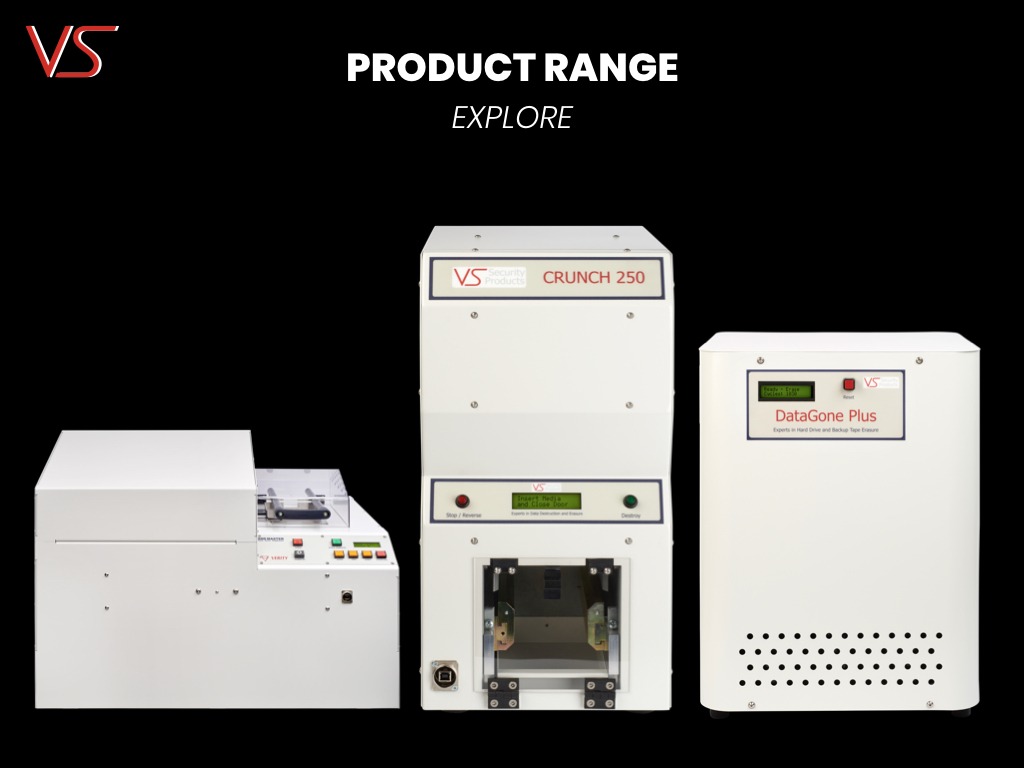
Designed to shred SSDs, CDs, and other flash-based storage, the Mediagone 500 ensures complete destruction of high-density data storage. Its compact, office-friendly design makes it ideal for organizations managing sensitive customer or operational data.
2. DataGauss LG Max for HDDs
The DataGauss LG Max degausses magnetic storage devices like HDDs, effectively erasing all data by disrupting magnetic fields. It also provides auditable destruction reports, ensuring compliance with the most stringent data laws.
Together, these tools form a comprehensive solution for businesses needing to address diverse storage media securely.
— –
Emerging Data Challenges in 2025
In addition to regulatory pressures, organizations are grappling with several emerging challenges:
– AI and Machine Learning Risks: The widespread adoption of AI tools has increased the volume and sensitivity of stored data, necessitating robust governance frameworks.
– Supply Chain Vulnerabilities: With reliance on third-party vendors growing, companies must ensure data security extends beyond their internal systems.
– Data Sovereignty Issues: As more nations impose strict localization laws, businesses must adapt their operations to ensure data is processed and destroyed in compliance with local mandates.
These challenges underscore the importance of implementing end-to-end data governance practices, from collection to destruction.
Sam Adetoso, Sales Director at Verity Systems, shares insights on the growing demand for on-site data destruction solutions:
“We’ve seen a significant shift in how organizations view data disposal. Companies are no longer just securing data — they’re ensuring it cannot be recovered once devices are retired. Data security devices like the Mediagone 500 and DataGauss Max are becoming staples in offices worldwide because they combine efficiency, security, and compliance. It’s about staying ahead of the curve.”
— –
Data Security Landscape
The landscape of data security and governance in 2025 is both challenging and transformative. Businesses face increased costs and scrutiny, but they also have access to advanced tools and practices to protect themselves.
As organizations navigate this evolving terrain, a proactive approach to data management — rooted in secure disposal — will be key to mitigating risks, fostering trust, and ensuring long-term success. With governments, customers, and stakeholders demanding higher standards, the importance of robust data governance has never been clearer.
If you are looking for a data destruction solution for your business that can be operated in an office environment, contact one of our experts today: [email protected].
Photo credit: Maximalfocus